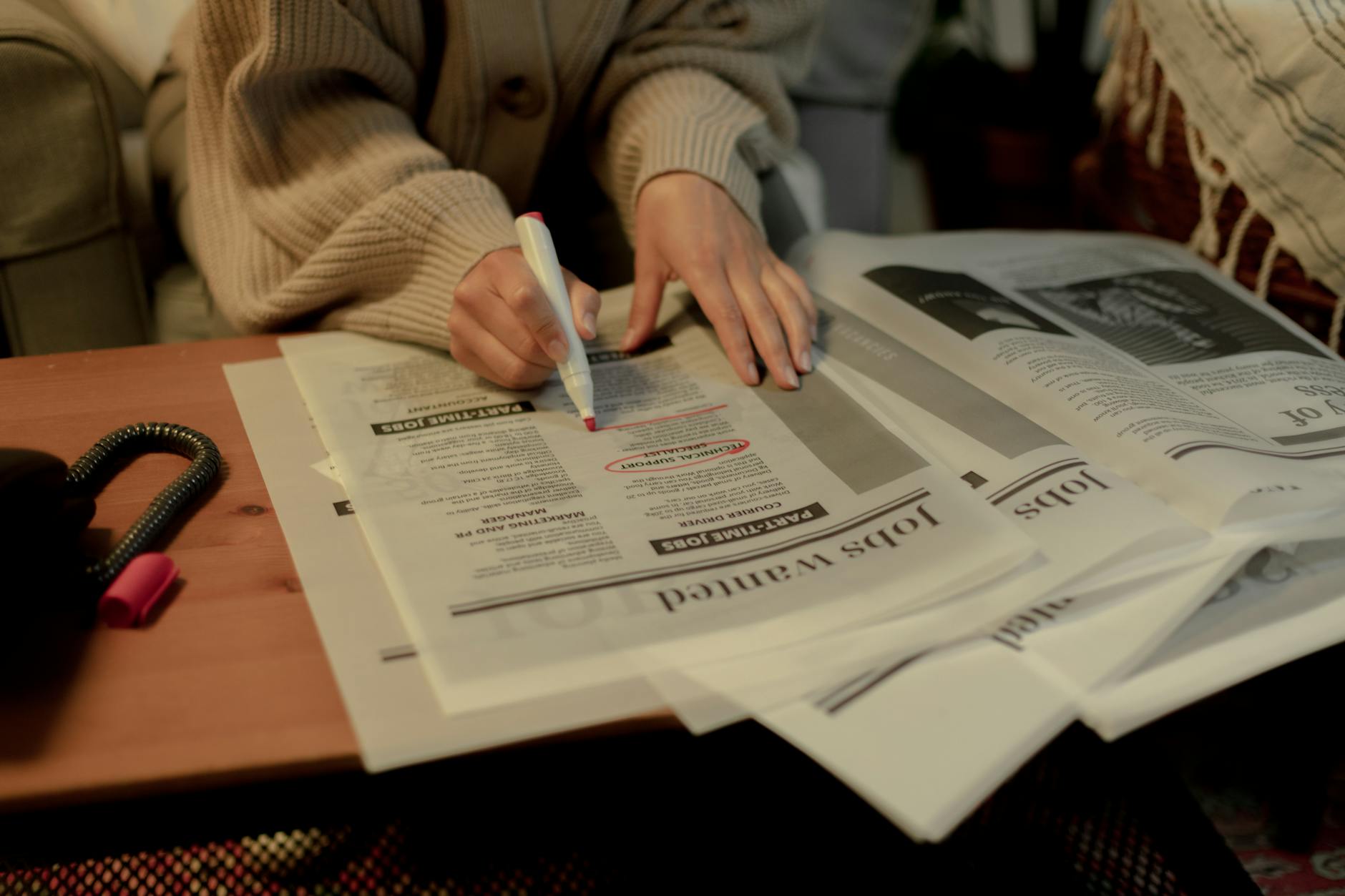
I haven’t looked for a job in decades. Since I was 23, I’ve been an owner and director, building and running businesses through recessions, family crises, sleepless nights, and survival. My name is still on the paperwork. I’m still a shareholder and an executive director in several of these businesses. But after an ex-parte motion in court, I was cut off from the day-to-day running of the very businesses I helped build.
And so, for the first time in forever, I’m applying for jobs.
Healing Before Starting
I couldn’t have done this six months ago. Or even three months ago.
For the past 18 months, I’ve been in therapy — crying, breaking down, healing, rebuilding. Healing is not a straight line. Some days I stand tall; other days I’m on the floor in tears. Along the way, I’ve been raising four children through trauma of their own: teenagers who shut down, a child who threatened suicide, little ones who still need stability and safety.
At the same time, I’ve been renovating a house left in ruins — a disaster zone I’ve been piecing back together, trying to create a home.
And all of this with a brain fog that only survivors of trauma will understand. Complex trauma rewires your mind. It’s not laziness. It’s not weakness. Trauma fog looks like this:
- Reading the same line three times and still not taking it in.
- Forgetting why you walked into a room.
- Staring at a to-do list, paralyzed.
- Feeling “lazy” when really your brain is overloaded.
I don’t have a formal PTSD diagnosis, and maybe I never will. A label won’t change what I live with. Only I can change me. And through therapy, step by step, I am.
Clearing the Ground
This year, I’ve faced the mountains of paperwork that haunted me. I exported and unpacked everything, sorted it all, and now I’m down to just two boxes ready to archive under clear headings. I even bought proper archive boxes. That job isn’t bugging me anymore.
I’ve contacted everyone I needed to about the debts that were dumped on me. I’ve dealt with the financial mess. For the first time in years, my personal admin and paperwork are actually up to date.
I’ve briefed my civil lawyer to push that case forward. I’ve fired my old family lawyer and given my new one everything they need. Right now, I have five court dates pending — but for once, I feel on top of them.
And with all that cleared, I can finally turn to myself. To ask: what do I want to do for work?
The Missing Pension
Another layer to all of this is money. My working life has been split between two countries — and two continents. And while my ex-husband always got paid, I didn’t.
I was naïve. I was in love. I had no inkling of the financial abuse that was to come. I worked just as hard, if not harder, but my pay never came. And the cost of that is clear now: I don’t have a pension.
I’m 48, with a ton of experience, but no financial safety net waiting for me. That means this job search isn’t just about self-worth — it’s about survival, independence, and building a future that’s mine alone.
I also know I’m probably “overqualified” for a lot of the jobs out there. That doesn’t bother me. If I’ve applied, it’s because I want the job. That’s my choice. But I also know it might turn some companies away. Sigh.
Still, I’d rather face a hundred rejections than sit back and do nothing.
The First Interview Invitation
I polished up my résumé — not sure how “awesome” it is, but it’s done. I even paid the $9.97 fee for four weeks of access to keep editing and customizing. I wrote cover letters. I applied for eight jobs.
And now, one of them has come back with an invitation to interview.
For a moment, I felt proud. Seen. Like maybe there was still space for me in the working world.
Then I told my 16-year-old.
She wrinkled her nose at the pay. “Oh, I earn just a little less than that.”
The pride drained out of me. I cried in the car, feeling worthless. Like my experience and qualifications didn’t mean anything.
Then came her second comment: “What are the hours? Because you’ll need to work around my cross-country, my other activities, and my job.”
I didn’t even know how to answer.
Boundaries and Self-Worth
Her comments weren’t meant to hurt me — they were practical, spoken from a teenager’s perspective. But they struck something deeper.
For years, my life has been measured by how well I could bend myself around everyone else’s needs: my children, my businesses, my marriage, my survival.
But as I step into this new chapter, I realize something important:
- My work matters too. Not just for a paycheck, but for the dignity of rebuilding.
- I can’t always bend. If I keep breaking myself to fit around everyone else, there will be nothing left of me.
- My kids need to see me stand. Not just as their mother, but as a woman who can start again after being stripped bare.
What I wish I had said in that moment was:
“Yes, I’ll show up for you. But I also need to show up for me. Because if I don’t, there will be nothing left to give.”
Choosing Freedom
Part of this healing is also about freedom from my past.
I don’t want to work with my ex-husband anymore. Part of why I’m doing so well is because he can’t contact me — his bail conditions keep him away. That silence has given me space to breathe, to think, and to heal.
So my plan is this: resign from any active roles in the businesses he runs. Stay on as a shareholder and executive director to protect my rights. Keep access to the information I need to prevent fraud — and if necessary, push for an external audit. Ensure I get the dividends and profits due to me. But never again get pulled into his day-to-day control.
I want to be free. Truly free.
He’s still dragging out the divorce, refusing to sign the paperwork. But that’s in my brief to my lawyer. I’m on top of it.
My First Interview in Decades — and It Was With a Robot
I finally did it: I accepted the interview invitation. I thought it would be a normal interview where you sit down with someone, answer questions, and maybe laugh nervously along the way. But no — this was something else entirely.
It was a one-way video interview. A third-party platform accessed my camera and microphone, and I was given ten questions. For each one, I had one minute to read and think, and then two or three minutes to record my answer. No interviewer. No human nodding along. Just me, a blinking camera light, and a countdown clock.
In theory, you could take each question twice — but on one of them, I somehow had zero retakes. I completely fluffed it, laughed at myself, and carried on. It was surreal. You want to ask for clarification — “Do you mean a small task or a big one? Something new or something I’m used to?” — but there’s nobody there. You just answer in the broadest way you can, hoping you’re hitting what they want.
And then the worst part: you can play back your own video. That was distressing enough to make me cringe — noticing wrinkles I hadn’t seen before, hearing my own voice in a way I don’t like. But I made a decision: if I felt I’d answered well enough on the first take, I just clicked submit. Life doesn’t usually give you do-overs, so why obsess?
Was it perfect? Absolutely not. Was it surreal? Completely. Did I gain experience? 100%.
If I don’t get this job, that’s okay. Because now I know how this process works. Next time, I’ll prepare a little more — brainstorm possible questions, think through my answers, and walk in with a plan. This time, I just jumped in with both feet, the way I often do. And maybe that’s not such a bad thing.
It wasn’t the most comfortable experience, but it was a powerful one. Proof that I’m moving forward, learning new things, and taking steps I never thought I’d take again.
Why a Résumé Is More Than Just Paperwork
For someone who hasn’t lived through abuse, making a résumé or applying for a job might seem like an everyday task. But for me, it’s something else entirely.
After years of living in an abusive, narcissistic relationship — where my self-worth was chipped away piece by piece — even daring to say I want to work, I want to be seen, I want to try is huge. Abuse teaches you that you are nothing, that you can’t do better, that your future belongs to someone else. Domestic violence isn’t just about bruises; it’s about control. It’s about making you believe you don’t deserve more.
So when I sat down, updated my résumé, paid the $9.97 for access, and actually started applying for jobs, it wasn’t just administration. It was an act of defiance. It was me saying:
- My story is not over.
- My value is still here.
- My future belongs to me now.
Every application I send, every cover letter I write, every interview I accept — they’re not just steps toward employment. They’re steps toward confidence. Toward independence. Toward proving to myself that I am more than what happened to me.
And even if I don’t get the job, I’ve already won something bigger: I’ve taken control of my life again.
A Note to Anyone Starting Over
If you’re reading this and you’ve been through something similar — abuse, trauma, loss, or simply years of putting yourself last — please know this: you are not alone, and it’s never too late to begin again.
Starting over is messy. It’s exhausting. It feels humiliating at times. But every tiny step matters. Even if it looks small from the outside, it’s massive inside.
Here are a few things I’ve learned so far:
- Start small, but start.
Update your résumé. Apply for one job. Make that phone call. Book that appointment. The first step is the hardest — and the most powerful. - Celebrate progress, not perfection.
Don’t wait until you’ve landed the dream role to feel proud. Every application, every interview, every conversation is proof you’re moving forward. - Remember that healing isn’t linear.
Some days you’ll feel strong; other days you’ll feel broken again. Both are normal. What matters is that you keep showing up for yourself. - Set boundaries.
You are not selfish for prioritizing your own needs. Your work, your healing, and your dreams matter as much as anyone else’s. - See it as reclaiming, not just working.
Writing a résumé, applying for jobs, attending interviews — these aren’t just tasks. They’re acts of defiance against everything that told you you weren’t enough. - Let the journey be practice.
Even if you don’t get the job, you’ve gained experience. You’ll be better prepared for the next one. Every step teaches you something.
Closing Thoughts
Starting over doesn’t mean starting from scratch. It means starting from experience, from survival, from resilience.
If you’re in the middle of it like me, know this: you are stronger than you think, more capable than you feel, and braver than you realize.
And sometimes the bravest thing you can do is simply to click submit.
