When the Season Is Still Haunted, but We Keep Going Anyway
I still hate Christmas.
That feels important to say — not because this year was a failure, but because honesty matters more than appearances.
We did many things right this year.
We tried hard.
We made new memories.
And yet, Christmas still carries ghosts.
That is the reality of surviving domestic violence.
What Christmas Used to Be — and What It Became
Christmas used to be my favourite season. I built traditions deliberately — creating the magic I didn’t grow up with, hoping my kids would feel warmth, joy, and safety.
We cut down our own tree.
I baked snowflake-shaped pull-apart cinnamon bread on Christmas morning.
Christmas Eve was nacho night — loud and messy
I wrapped gifts late into the night, tired but happy i was making memories for the kids
But domestic violence doesn’t stop at the front door — it seeps into everything.
Christmas becomes a stage.
A pressure cooker.
A performance.
A time when tensions rise, control tightens, and fear lurks just under the surface.
When you’ve lived through that, Christmas never quite resets.
This Year Was Better — and Still Hard
This year, we started again.
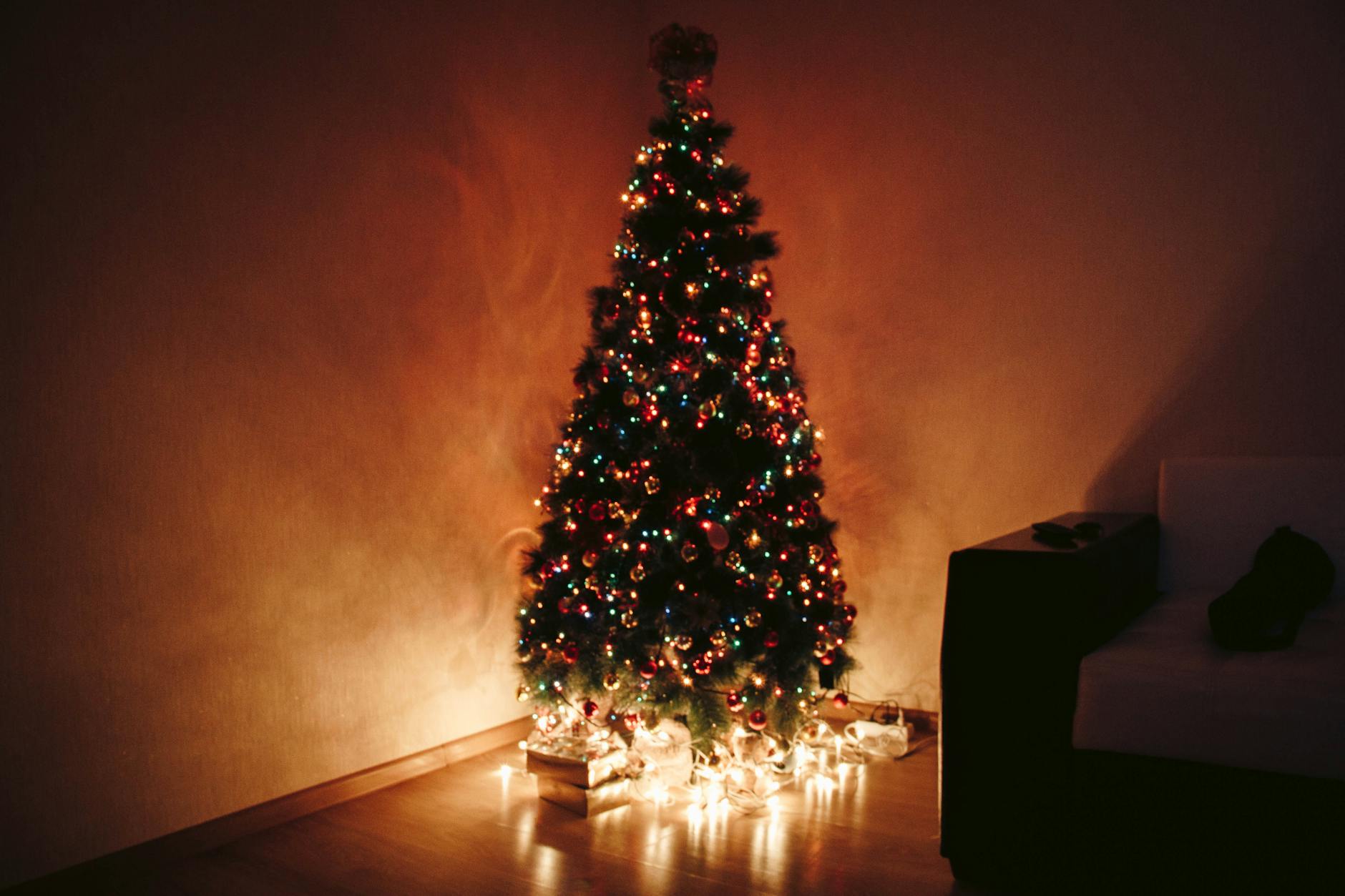
A new tree.
New decorations.
No history attached.
It took days, not hours.
But eventually the living room was decorated, and two small trees twinkled outside in the dark.
We kept the traditions the kids chose:
- Nachos on Christmas Eve
- Snowflake pull-apart cinnamon bread on Christmas morning
They chose turkey and ham for dinner — cooked with one air fryer and a microwave, somehow pulled off through sheer determination.
We swapped Christmas cake for a Yule log.
There were Nerf gun battles.
The kids loved their presents.
They laughed.
Santa came.
Flour and glitter footprints were a total success — thanks to my eldest daughter — and I suspect the glitter will be with us all year as a reminder that this Christmas happened.
Objectively, it was a success.
Emotionally, it was still heavy.
The Drama Didn’t Stay in the Past
What people don’t see — and what social media never shows — is that Christmas for survivors often comes with legal and emotional ambushes as well as the emotional ones.
In the final hours before Christmas, there were last-minute attempts to organise additional parenting time — too late, outside the court order, and after months of legal hostility.
Then came indirect contact.
Messages that should never have been sent.
Messages that triggered panic, fear, and a familiar tightening in my chest.
I held my boundary anyway.
I checked bail conditions.
I contacted non-emergency police on Christmas Eve.
I documented everything.
I will give a statement tonight at 8pm on Boxing Day.
I did the exhausting work of protecting myself while already stretched thin.
This isn’t drama-seeking.
This is survival while the justice system moves slowly.
And what’s hardest — what almost no one prepares you for — is that as trial approaches, your tolerance shrinks.
The “window of tolerance,” therapists call it.
Mine has left the building.
I have zero capacity for anything that smells like threat, manipulation, or boundary-testing — and that makes perfect sense when trial is three weeks away.
What No One Explains to Victims About Bail Conditions
Here is something I wish someone had told me earlier:
Victims are not given a clear, practical explanation of what bail conditions actually mean.
There is no checklist.
No plain-language guide.
No “this counts / this doesn’t” handout.
Your family lawyer isn’t the Crown.
The Crown isn’t your lawyer.
You’re a witness, not a party.
So you’re left navigating:
- direct vs indirect contact
- third-party involvement
- timing
- intent
- enforcement
- documentation
all while triggered, scared, and exhausted.
That confusion alone keeps victims on edge.
I Didn’t Find Joy — and That’s Okay
I didn’t feel peace this Christmas.
I didn’t feel lightness.
I didn’t feel festive.
What I felt was:
- vigilance
- sadness
- grief
- fear
- exhaustion
- and moments of fragile hope
And yet — the kids laughed.
They smiled.
They played.
They stayed for a few hours all together in the living room watching tv, reading and chatting with friends on their phones.
And they also hid in their rooms – which is where they feel safest with doors closed.
At one point, I cried and melted down — because pulling Christmas together whilst renovating and having only a microwave and airfryer, whilst the ex fails to pay child support so i racked up a huge credit card debt to make it all happen for my kids and with the 2nd anniversay of my dad’s death the day before trial starts in 3 weeks. As well as knowing i have to go back to the police station to make another statement the next day – I just felt overwhelmed.
I removed myself.
I went to bed for a few hours.
I didn’t spill my trauma onto them.
I didn’t make my pain theirs.
That, too, is progress – even though it feels like i failed.
Why I Won’t Post a “Perfect Christmas” Photo
I haven’t posted matching outfits or staged family photos.
Not because we didn’t “do Christmas,” but because pretending perfection feels dishonest.
This season is one of heightened suicide risk.
Heightened domestic violence.
Heightened mental health struggles.
So many families are just trying to survive December.
I don’t want to glamorise something that still hurts.
But I also don’t want to expose my children to public storytelling about fear and trauma.
So this story lives here — honestly, carefully, quietly.
Haunted, But Healing
Christmas still haunts us.
But this Christmas was better than last Christmas.
And maybe that’s enough for now.
Maybe healing doesn’t mean loving the holiday again.
Maybe it just means each year hurts a little less.
Maybe new memories slowly crowd out the old ones.
Maybe fear loosens its grip over time.
Maybe one day, Christmas will feel neutral — and neutrality will feel like freedom.
I made it through.
I held boundaries.
I protected the kids.
I tried.
And sometimes, that is the bravest kind of joy there is.
